Mawlid sweets are an Egyptian tradition
Posted: Wed Jan 23, 2013 11:53 am
Large tents have been set up near Egyptian mosques and shrines to celebrate Prophet Mohammed's birth (al-Mawlid al-Nabawi), which this year falls on Thursday (January 24th).
The Egyptian Ministry of Religious Endowments will celebrate al-Mawlid with a ceremony to be attended by Egyptian President Mohamed Morsi, the Prime Minister, Al-Azhar clerics and other dignitaries.
Traditional rituals, from singing religious songs to the preparation of special sweets, have long been associated with the celebration of al-Mawlid in Egypt.
"The ritual of celebrating the birth of Prophet Mohamed started in Egypt at the beginning of the Fatimid era, during the days of Caliph al-Mu'iz Lideen Allah (in 1566 A.D.)," said Hamed al-Zaini who teaches Islamic history at Al-Azhar University.
"This marked the start of celebrating al-Mawlid as an official and folk occasion that became one of the other six main birthdays celebrated by the Fatimids," he said.
Festivities have a traditional flavour
During the time of the Fatimid rule, public squares were decorated for the occasion. Tents were set up for Sufi singing and the retelling of the Prophet's journey, and there were games for children and specially-made sweets – a tradition that still lives on, al-Zaini added.
"In spite of efforts by the Ayyubids and other rulers to ban this celebration claiming it has no bearing on the Muslim religion, Egyptians' love of celebratory rituals in general allowed this tradition to continue until this day," he told Al-Shorfa.
Festivities take on a traditional flavour, particularly in the Upper Egypt region and poorer residential districts, where Egyptian families celebrate al-Mawlid and visit the large tents and religious recitation sessions to listen to religious songs and watch folk art shows.
"Celebrations for the occasion, called Dawrat al-Mawlid, resemble a huge carnival," al-Zaini said. "In cities, people roam the streets and visit the holy shrines while in villages, people parade around the village and visit the shrines of the prophet's followers".
Families give away sweets, meat and vegetables to their married daughters and everyone exchanges sweets that are specially made for the occasion, he added.
A sweet tradition
Al-Zaini described a custom in which the husband or fiancé gives his wife or betrothed Arous al-Mawlid (al-Mawlid bride), a doll made of sugar and nuts and decorated with coloured paper.
"There is also al-Fares sweet, a knight doll on a horse waving its sword as a sign of conquest and war victories," he said.
The price of al-Mawlid sweets this year starts at five Egyptian pounds ($0.75) and goes up to 100 pounds ($15), according to Saleh Adham, who owns a shop that sells sweets and dried fruits and nuts.
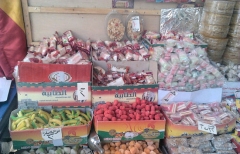
In addition to Arous al-Mawlid, there are different kinds of sweets, he told Al-Shorfa: al-simsimiya (sesame), al-humusiya (dried chickpea), al-foulia (beans), al-malban (Turkish delight), as well as sweets made from coloured sugar and shaped as fruits.
"The al-Mawlid bride sweet has a special place in my childhood as I don't ever remember celebrating without it," said Haifa Ali, a 45-year-old homemaker, who described al-Mawlid as "a happy and joyous occasion for Egyptians, which brings children closer to religious rituals".
Tariq al-Anzi, a Saudi student studying at Cairo University's College of Engineering, has enjoyed celebrating al-Mawlid in Cairo since he came to Egypt four years ago.
"I go with a bunch of my friends to the Cairo squares that are famous for these celebrations, especially the squares near Imam al-Hussein Mosque and Sayyida Zainab," he said. "You can only find such sights in Egypt where there is a beautiful traditional and religious spirit."
His wandering introduced him to "beautiful Sufi celebrations and music accompanying religious songs", he said.
A popular product
Al-Mawlid also is good for business, according to Safi Qadri, of the confectionary section at the Cairo Chamber of Commerce.
There are "nearly 5,000 factories working during this time of year to meet demand, and around 40 tonnes of goods that cost at least 4 billion pounds ($603 million)", he said.
"This figure resuscitates the Egyptian market," he added.
Prices for al-Mawlid sweets have risen in recent years due to an increase in the cost of basic ingredients, particularly cooking oil, sugar and nuts, he said, estimating this year's increase at around 7%.
Source: http://al-shorfa.com/en_GB/articles/mei ... feature-02
The Egyptian Ministry of Religious Endowments will celebrate al-Mawlid with a ceremony to be attended by Egyptian President Mohamed Morsi, the Prime Minister, Al-Azhar clerics and other dignitaries.
Traditional rituals, from singing religious songs to the preparation of special sweets, have long been associated with the celebration of al-Mawlid in Egypt.
"The ritual of celebrating the birth of Prophet Mohamed started in Egypt at the beginning of the Fatimid era, during the days of Caliph al-Mu'iz Lideen Allah (in 1566 A.D.)," said Hamed al-Zaini who teaches Islamic history at Al-Azhar University.
"This marked the start of celebrating al-Mawlid as an official and folk occasion that became one of the other six main birthdays celebrated by the Fatimids," he said.
Festivities have a traditional flavour
During the time of the Fatimid rule, public squares were decorated for the occasion. Tents were set up for Sufi singing and the retelling of the Prophet's journey, and there were games for children and specially-made sweets – a tradition that still lives on, al-Zaini added.
"In spite of efforts by the Ayyubids and other rulers to ban this celebration claiming it has no bearing on the Muslim religion, Egyptians' love of celebratory rituals in general allowed this tradition to continue until this day," he told Al-Shorfa.
Festivities take on a traditional flavour, particularly in the Upper Egypt region and poorer residential districts, where Egyptian families celebrate al-Mawlid and visit the large tents and religious recitation sessions to listen to religious songs and watch folk art shows.
"Celebrations for the occasion, called Dawrat al-Mawlid, resemble a huge carnival," al-Zaini said. "In cities, people roam the streets and visit the holy shrines while in villages, people parade around the village and visit the shrines of the prophet's followers".
Families give away sweets, meat and vegetables to their married daughters and everyone exchanges sweets that are specially made for the occasion, he added.
A sweet tradition
Al-Zaini described a custom in which the husband or fiancé gives his wife or betrothed Arous al-Mawlid (al-Mawlid bride), a doll made of sugar and nuts and decorated with coloured paper.
"There is also al-Fares sweet, a knight doll on a horse waving its sword as a sign of conquest and war victories," he said.
The price of al-Mawlid sweets this year starts at five Egyptian pounds ($0.75) and goes up to 100 pounds ($15), according to Saleh Adham, who owns a shop that sells sweets and dried fruits and nuts.
In addition to Arous al-Mawlid, there are different kinds of sweets, he told Al-Shorfa: al-simsimiya (sesame), al-humusiya (dried chickpea), al-foulia (beans), al-malban (Turkish delight), as well as sweets made from coloured sugar and shaped as fruits.
"The al-Mawlid bride sweet has a special place in my childhood as I don't ever remember celebrating without it," said Haifa Ali, a 45-year-old homemaker, who described al-Mawlid as "a happy and joyous occasion for Egyptians, which brings children closer to religious rituals".
Tariq al-Anzi, a Saudi student studying at Cairo University's College of Engineering, has enjoyed celebrating al-Mawlid in Cairo since he came to Egypt four years ago.
"I go with a bunch of my friends to the Cairo squares that are famous for these celebrations, especially the squares near Imam al-Hussein Mosque and Sayyida Zainab," he said. "You can only find such sights in Egypt where there is a beautiful traditional and religious spirit."
His wandering introduced him to "beautiful Sufi celebrations and music accompanying religious songs", he said.
A popular product
Al-Mawlid also is good for business, according to Safi Qadri, of the confectionary section at the Cairo Chamber of Commerce.
There are "nearly 5,000 factories working during this time of year to meet demand, and around 40 tonnes of goods that cost at least 4 billion pounds ($603 million)", he said.
"This figure resuscitates the Egyptian market," he added.
Prices for al-Mawlid sweets have risen in recent years due to an increase in the cost of basic ingredients, particularly cooking oil, sugar and nuts, he said, estimating this year's increase at around 7%.
Source: http://al-shorfa.com/en_GB/articles/mei ... feature-02