Suffer little children: Can charity ads violate child rights
Posted: Tue Aug 14, 2012 8:43 pm
Suffer little children: Can charity ads violate child rights in Egypt?
How far can Egyptian advertising companies go in using suffering children - poor and ill - in charity ads?
The advertisement goes like this: three-year-old Asmaa looks pale and upset, and suddenly starts crying. Two hands harshly dry her tears, then she smiles again, with melodramatic music and simple words written on the screen: "illness, cancer, pain and hope."
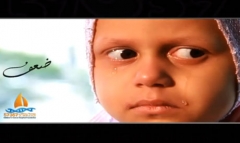
Printscreen of Asmaa advertisement in which slogan reads,
"Weakness" alongside the still of the young girl crying.
The advertisement is currently being aired by private
and public television channels.
This is one of the many new advertisements using suffering children to raise money for health this month. As the fasting month of Ramadan is coming to an end, and Eid is approaching, it is the biggest charity season. Hospitals are competing to get people to donate money or pay their religious dues to this hospital or that.
Another advertisement features sick children each saying, "You can help me," while waving a finger at the viewer. A third advertisement shows children praying and reading Quran, with the message, "Keep them in your prayers and donate what you can."
These advertisements leave some viewers upset, others shocked, angry or neutral. But is it ethical to use ill and suffering children in charity advertisements? How far can one go?
"Some of these advertisements should be banned by law. The advertisement where they make the baby cry, and mercilessly dry the tears while pulling her skin so that we see her red eyelids, now this is ruthless," says angry Ferial Ahmed, 50, while buying medicine from a pharmacy in the upscale neighbourhood of Mohandeseen.
Here Amira Wagdy, pharmacist, intervenes: "Yes, the advertisement may not be ethical, but some people will not donate unless they are cruelly faced with people's suffering." Wagdy, 34, wishes that everyone pays their "dues" without being pushied and without using the suffering of children, who "not only suffer in real life, but also have to sell their suffering on camera."
Hany Helal of the Egyptian Child Rights Centre believes that using children in charity advertisements is a clear form of child abuse. "Using children to raise money is illegal, and unacceptable. The state should provide every child with free and proper healthcare. No child should beg for treatment," Helal told Ahram Online.
But the state is not providing either children or grown ups with free or proper healthcare. Latest government studies show that 25 per cent of Egypt's children suffer malnutrition-related diseases. Also Egypt comes 80th in the world in terms of mortality rates in children to five years old.
Health services form only five per cent of the current annual state budget.
Reality shocks
As soon as one steps into the only children's cancer hospital in Egypt, 57357, the terrible facts and figures come to life. Visibly ill and pale children in wheel chairs fill the large reception, the corridors, the elevators and the toilets. Countless mothers carry hairless babies. The hospital only accepts one third of children with cancer in Egypt. Though it is free of charge, there are long lines of children waiting to get in. The hospital has the only radiotherapy and chemotherapy equipment in Egypt, so both children and grown ups come for treatment.
The hospital has the largest variety of advertisements and was one of the producers of the much debated wave of advertisements using suffering children on camera.
Wahba believes that ethically there is no problem in using suffering children. "We are showing the reality, and we only do the ad after consent of the child and the family. We don't use models; children with cancer are not happy children, they are pale, hairless and suffering," said Wahba, referring to the recent ad of the crying child.
She continues, explaining the process of how this advertisement was filmed. The hospital has it's own media unit that produces their advertisements. "The board unanimously agreed on this advertisement. The initial story board was different. Asmaa was supposed to talk about her illness and her suffering, but she surprised us all with her crying, so we changed the script," said Wahba.
On a psychological level
Is there an emotional burden — other than the physical one — that Asmaa could be suffering from, explaining her bursting into tears on camera?
According to Mohamed Nasr El-Din, a psychiatrist in Cairo University, she could be crying of pain, or anxiety. He also adds that there are both positive and negative sides to children appearing in advertisements. "On the positive side, they are sharing their experiences and creating awareness in society. But on the negative side they are promoting their own illness, which maybe considered a stigma," said Nasr El-Din, who also works at 57357 Hospital.
Helal, the child rights activist, repeats that children appearing in charity advertisements is against human dignity and that no child should be shown on his sick bed begging for help. "Egypt signed the Convention on the Rights of the Child, which states that child dignity should be protected. The annual state health budget should bear in mind the number of ill children and provide them with the necessary healthcare. Civil society and charity should work on improving the already existing services, but not create them."
Corporate responsibilty or marketing?
For Alia Arafa, a development expert, using suffering children in advertisements is "definitely ethical." "It is shocking, just like war photos. Reality is shocking. If it wasn't for the photos we see from the Palestinian Intifada, Israel wouldn't have been scandalised," said Arafa.
For Arafa, the question is not ethical or not; the question is about the intention behind the advertisement. "Some of the business companies perceive corporate social responsibility as part of their marketing agenda. They donate money not for the cause, but to write their names on it. No real development results, because they either don't have the know-how or don't support long term initiatives," Arafa told Ahram Online.
Little hearts
At the office of the Magdy Yacoub Heart Surgery Charity in Zamalek, there are only three employees. Miral Al-Zalabany, the assistant executive director, answers Ahram Online questions in the middle of dozens of phone calls. Magdy Yaqoub Hospital was part of another debated advertisement in which the child doesn't cry or beg for help, but rather smiles and says "I want to live," in answer to the question "What do you want?" Other healthy children answer, "I want many toys," "I want long hair," "I want to eat koshary."
The award winning and renowned Egyptian heart surgeon, Magdy Yacoub, who is based in the UK, followed his dream of building a charity hospital in Aswan in Upper Egypt for children with heart problems. He did not think he would get 1000 children a day who need heart surgery.
Each operation costs around $5000. The hospital did not use children in their advertisements until recently. Al-Zalabany admits she had difficulty convincing the ethical committee in the Yacoub institution. "They said no children photos nor names. But I pushed for it. I have a bigger aim: to find the money for thousands of children to do heart surgeries, or else they will die," she said. Al-Zalabany adds: "The advertisement was successful, and even though the production is a gift, we pay for air time. It was risky, but thank God it was very successful. For every pound I spent I got back 17 to 25 pounds."
Al-Zalabany agrees that using children in advertisements should be kept to a minimum. She laments that the advertisement industry needs some time to evolve, to use creative imagery rather than the classic images they are used to. "After all, these are people who sell butter and shampoo; that is their expertise. They play it safe. No one wants to change," said Zalabani whose advertisement is less controversial than others using children. At least the children look happy and healthy, and the girl that appeared in the advertisement underwent heart surgery and is now healthy.
How much money?
Charity companies get discounted rates on air time. Ahram Online could not get an exact number, but the percentage a charity pays of cost price is between 30 to 50 per cent.
As for the actual production of the advertisement, in some cases the organisation does its own production, like 57357, while some get production as a gift, like Saadi Gohar who approached Magdy Yacoub Hospital and produces their advertisements free of charge. Others have to pay companies for their advertisements.
Whether using children in advertisements is ethical or not, stigmatising or not, the ugly fact remains that thousands of children suffer and don't recieve adequate healthcare. on or off camera.
Source: http://english.ahram.org.eg/News/50221.aspx
How far can Egyptian advertising companies go in using suffering children - poor and ill - in charity ads?
The advertisement goes like this: three-year-old Asmaa looks pale and upset, and suddenly starts crying. Two hands harshly dry her tears, then she smiles again, with melodramatic music and simple words written on the screen: "illness, cancer, pain and hope."
Printscreen of Asmaa advertisement in which slogan reads,
"Weakness" alongside the still of the young girl crying.
The advertisement is currently being aired by private
and public television channels.
This is one of the many new advertisements using suffering children to raise money for health this month. As the fasting month of Ramadan is coming to an end, and Eid is approaching, it is the biggest charity season. Hospitals are competing to get people to donate money or pay their religious dues to this hospital or that.
Another advertisement features sick children each saying, "You can help me," while waving a finger at the viewer. A third advertisement shows children praying and reading Quran, with the message, "Keep them in your prayers and donate what you can."
These advertisements leave some viewers upset, others shocked, angry or neutral. But is it ethical to use ill and suffering children in charity advertisements? How far can one go?
"Some of these advertisements should be banned by law. The advertisement where they make the baby cry, and mercilessly dry the tears while pulling her skin so that we see her red eyelids, now this is ruthless," says angry Ferial Ahmed, 50, while buying medicine from a pharmacy in the upscale neighbourhood of Mohandeseen.
Here Amira Wagdy, pharmacist, intervenes: "Yes, the advertisement may not be ethical, but some people will not donate unless they are cruelly faced with people's suffering." Wagdy, 34, wishes that everyone pays their "dues" without being pushied and without using the suffering of children, who "not only suffer in real life, but also have to sell their suffering on camera."
Hany Helal of the Egyptian Child Rights Centre believes that using children in charity advertisements is a clear form of child abuse. "Using children to raise money is illegal, and unacceptable. The state should provide every child with free and proper healthcare. No child should beg for treatment," Helal told Ahram Online.
But the state is not providing either children or grown ups with free or proper healthcare. Latest government studies show that 25 per cent of Egypt's children suffer malnutrition-related diseases. Also Egypt comes 80th in the world in terms of mortality rates in children to five years old.
Health services form only five per cent of the current annual state budget.
Reality shocks
As soon as one steps into the only children's cancer hospital in Egypt, 57357, the terrible facts and figures come to life. Visibly ill and pale children in wheel chairs fill the large reception, the corridors, the elevators and the toilets. Countless mothers carry hairless babies. The hospital only accepts one third of children with cancer in Egypt. Though it is free of charge, there are long lines of children waiting to get in. The hospital has the only radiotherapy and chemotherapy equipment in Egypt, so both children and grown ups come for treatment.
The hospital has the largest variety of advertisements and was one of the producers of the much debated wave of advertisements using suffering children on camera.
Wahba believes that ethically there is no problem in using suffering children. "We are showing the reality, and we only do the ad after consent of the child and the family. We don't use models; children with cancer are not happy children, they are pale, hairless and suffering," said Wahba, referring to the recent ad of the crying child.
She continues, explaining the process of how this advertisement was filmed. The hospital has it's own media unit that produces their advertisements. "The board unanimously agreed on this advertisement. The initial story board was different. Asmaa was supposed to talk about her illness and her suffering, but she surprised us all with her crying, so we changed the script," said Wahba.
On a psychological level
Is there an emotional burden — other than the physical one — that Asmaa could be suffering from, explaining her bursting into tears on camera?
According to Mohamed Nasr El-Din, a psychiatrist in Cairo University, she could be crying of pain, or anxiety. He also adds that there are both positive and negative sides to children appearing in advertisements. "On the positive side, they are sharing their experiences and creating awareness in society. But on the negative side they are promoting their own illness, which maybe considered a stigma," said Nasr El-Din, who also works at 57357 Hospital.
Helal, the child rights activist, repeats that children appearing in charity advertisements is against human dignity and that no child should be shown on his sick bed begging for help. "Egypt signed the Convention on the Rights of the Child, which states that child dignity should be protected. The annual state health budget should bear in mind the number of ill children and provide them with the necessary healthcare. Civil society and charity should work on improving the already existing services, but not create them."
Corporate responsibilty or marketing?
For Alia Arafa, a development expert, using suffering children in advertisements is "definitely ethical." "It is shocking, just like war photos. Reality is shocking. If it wasn't for the photos we see from the Palestinian Intifada, Israel wouldn't have been scandalised," said Arafa.
For Arafa, the question is not ethical or not; the question is about the intention behind the advertisement. "Some of the business companies perceive corporate social responsibility as part of their marketing agenda. They donate money not for the cause, but to write their names on it. No real development results, because they either don't have the know-how or don't support long term initiatives," Arafa told Ahram Online.
Little hearts
At the office of the Magdy Yacoub Heart Surgery Charity in Zamalek, there are only three employees. Miral Al-Zalabany, the assistant executive director, answers Ahram Online questions in the middle of dozens of phone calls. Magdy Yaqoub Hospital was part of another debated advertisement in which the child doesn't cry or beg for help, but rather smiles and says "I want to live," in answer to the question "What do you want?" Other healthy children answer, "I want many toys," "I want long hair," "I want to eat koshary."
The award winning and renowned Egyptian heart surgeon, Magdy Yacoub, who is based in the UK, followed his dream of building a charity hospital in Aswan in Upper Egypt for children with heart problems. He did not think he would get 1000 children a day who need heart surgery.
Each operation costs around $5000. The hospital did not use children in their advertisements until recently. Al-Zalabany admits she had difficulty convincing the ethical committee in the Yacoub institution. "They said no children photos nor names. But I pushed for it. I have a bigger aim: to find the money for thousands of children to do heart surgeries, or else they will die," she said. Al-Zalabany adds: "The advertisement was successful, and even though the production is a gift, we pay for air time. It was risky, but thank God it was very successful. For every pound I spent I got back 17 to 25 pounds."
Al-Zalabany agrees that using children in advertisements should be kept to a minimum. She laments that the advertisement industry needs some time to evolve, to use creative imagery rather than the classic images they are used to. "After all, these are people who sell butter and shampoo; that is their expertise. They play it safe. No one wants to change," said Zalabani whose advertisement is less controversial than others using children. At least the children look happy and healthy, and the girl that appeared in the advertisement underwent heart surgery and is now healthy.
How much money?
Charity companies get discounted rates on air time. Ahram Online could not get an exact number, but the percentage a charity pays of cost price is between 30 to 50 per cent.
As for the actual production of the advertisement, in some cases the organisation does its own production, like 57357, while some get production as a gift, like Saadi Gohar who approached Magdy Yacoub Hospital and produces their advertisements free of charge. Others have to pay companies for their advertisements.
Whether using children in advertisements is ethical or not, stigmatising or not, the ugly fact remains that thousands of children suffer and don't recieve adequate healthcare. on or off camera.
Source: http://english.ahram.org.eg/News/50221.aspx
